



⇓ Protocol
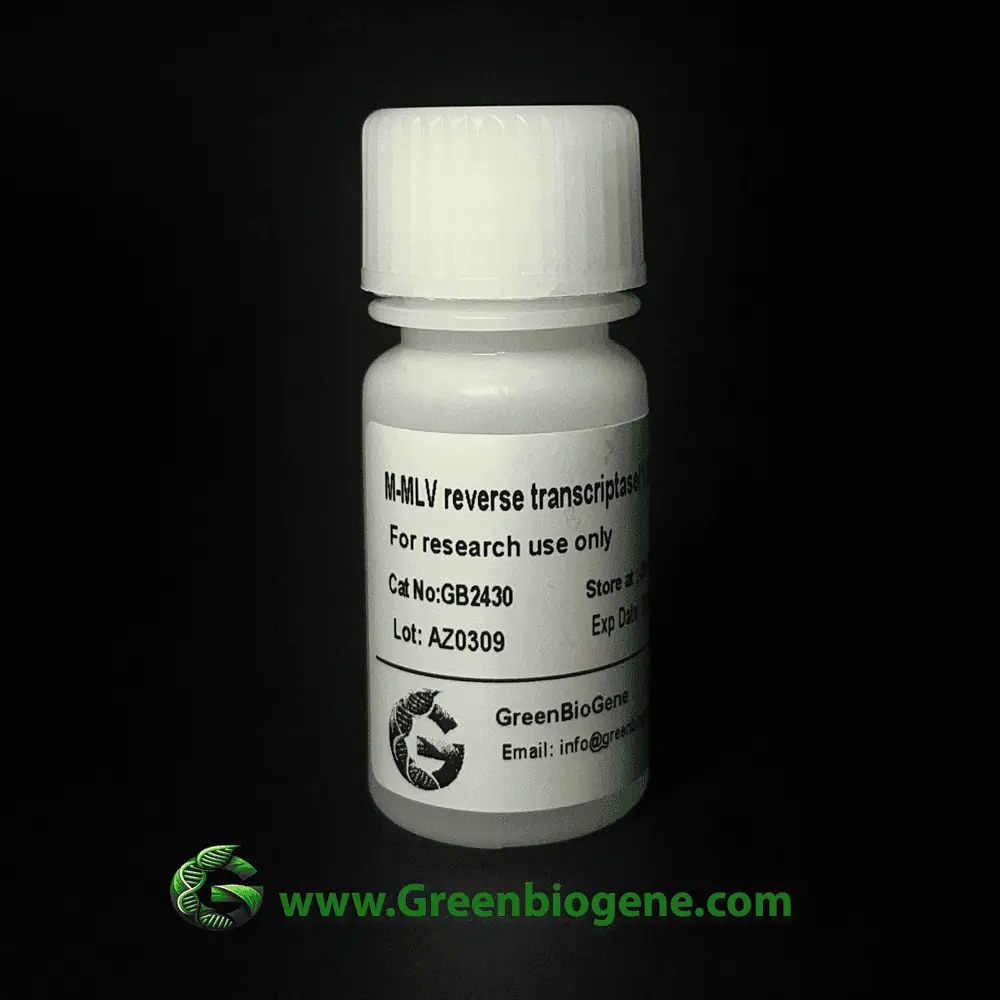
M-MLV Reverse Transcriptase RNase H Minus is a modified version of the Moloney Murine Leukemia Virus Reverse Transcriptase, designed to remove the RNase H activity. This modification makes it particularly useful for synthesizing long cDNA from long RNA templates (greater than 5kb).
Key Features
- High Efficiency: Capable of synthesizing full-length cDNA from long RNA templates.
- RNase H Minus: The lack of RNase H activity prevents degradation of RNA templates during cDNA synthesis.
- Thermostability: Functions optimally at temperatures around 37-42°C, with some versions engineered for higher thermostability.
Applications
- First-Strand cDNA Synthesis Using M-MLV: Converts RNA into cDNA for downstream applications.
- RT-PCR (Reverse Transcription PCR): Used to amplify cDNA for gene expression analysis.
- RNA Sequencing: Facilitates the creation of cDNA libraries for sequencing RNA transcripts.
- cDNA Cloning: Generates cDNA for cloning and subsequent analysis of gene structure and function.
Advantages
- High Yield: Produces high yields of cDNA, making it ideal for downstream applications.
- Robustness: Effective with various types of RNA, including challenging templates.
- Ease of Use: Simplifies the process of reverse transcription with standardized protocols.
Limitations
- RNA Quality: Requires high-quality RNA to produce reliable results.
- Enzyme Sensitivity: Sensitive to inhibitors commonly found in RNA preparations, such as ethanol or salts.
GB M-MLV Reverse Transcriptase RNase H Minus is a valuable tool for molecular biology research, enabling the conversion of RNA into cDNA for various applications.